Feeling your age? It might be due to “zombie cells.” Discover what senescent cells are, how they accelerate aging, and the science-backed strategies to fight back. A deep dive into the biology of getting older.
DISCLOSURE:
As an ClickBank Affiliate, I earn commissions from qualifying purchases made through links in this article. This income supports my research and content creation. Please understand that I recommend this product because I believe in its quality and benefits, and after conducting thorough research.

Introduction: It’s Not Just About Getting Older
Do you ever feel like you’re fighting a losing battle against aging? You’re eating right, trying to stay active, but you still can’t shake that persistent joint stiffness, mental fog, or lack of energy you didn’t have a decade ago.
For years, we’ve been told that aging is a natural, inevitable process of wear and tear. But what if that’s only a small part of the story? What if a significant part of what we call “aging” is actually driven by a specific biological process—one that we may be able to influence?
Groundbreaking research from leading institutions like the Mayo Clinic and Harvard is pointing the finger at a hidden culprit: senescent cells, more commonly known as “zombie cells.”
In this definitive guide, we will demystify what zombie cells are, explore the compelling science that identifies them as a fundamental driver of aging, and review the emerging strategies—including a detailed look at a prominent supplement—to help your body manage them.
Chapter 1: What Are Zombie Cells? A Biological Horror Story
To understand zombie cells, we first need to understand the normal life cycle of a cell.
Your body is made of trillions of cells, each with a specific job. Over time, as cells divide or get damaged, they reach a point where they can no longer divide. In a perfect world, these old or damaged cells would undergo a pre-programmed cell death called apoptosis. Think of it as a graceful, organized retirement for a cell that has served its purpose.
But the world isn’t perfect.
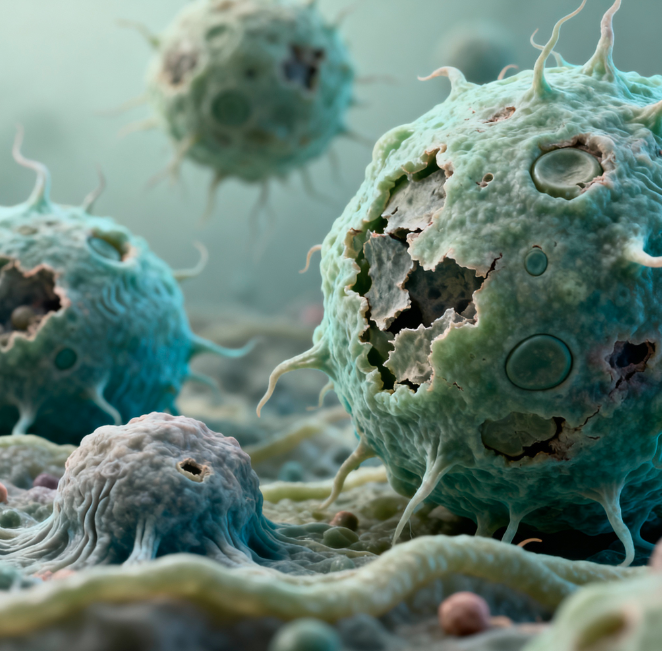
Sometimes, these cells refuse to die. Instead, they enter a state of suspended animation—they stop dividing but also refuse to exit the stage. They become senescent cells.
Why are they called “Zombie Cells”?
The nickname is eerily accurate. Like zombies in popular culture, these cells are:
- Neither fully alive nor dead: They’ve stopped functioning normally but are still metabolically active.
- Dangerous to the healthy: They don’t just sit there quietly. They secrete a potent cocktail of inflammatory signals, proteins, and enzymes known as the SASP (Senescence-Associated Secretory Phenotype).
- Infectious: The SASP doesn’t just cause local inflammation; it can damage surrounding healthy tissues and, most alarmingly, can turn other healthy cells into zombie cells, creating a cascading effect of cellular decay.
Chapter 2: The Good, The Bad, and The Ugly of Cellular Senescence
Before we declare all-out war on zombie cells, it’s important to know they aren’t always the villain. In specific, limited contexts, they play a necessary role.
The Good (A Temporary Fix):
Senescence is a crucial anti-cancer mechanism. When a cell’s DNA gets damaged, turning senescent prevents it from dividing and potentially becoming cancerous. It’s your body’s way of putting a damaged cell “in jail” to protect the rest of the organism. This is a beneficial, short-term response.
The Bad and The Ugly (The Problem of Accumulation):
The real trouble begins when these zombie cells accumulate over time. When we are young, our immune system is efficient at identifying and clearing out these senescent cells. But as we age, our immune surveillance weakens. The “garbage disposal” slows down, and the zombie cells start to pile up.
This accumulation is where the direct link to aging becomes undeniable. The constant, low-grade, inflammatory SASP signal from these cells damages the surrounding tissue environment, leading to what scientists now call “inflammaging”—chronic, age-related inflammation.
Chapter 3: How Zombie Cells Accelerate Aging: The Evidence
The SASP from accumulated zombie cells is like a constant drip of corrosive rust on the machinery of your body. Here’s how this manifests in the common signs of aging:
- Wrinkles and Sagging Skin: Zombie cells in the skin (particularly fibroblasts, which produce collagen) secrete enzymes that break down the collagen and elastin that keep your skin firm and supple. The result? Thinner, less elastic skin, wrinkles, and slower wound healing.
- Joint Discomfort and Stiffness: Senescent cells accumulate in cartilage, promoting inflammation and degrading the tissue that cushions your joints. This is a key driver of age-related joint issues and osteoarthritis.
- Cognitive Decline and “Brain Fog”: When zombie cells accumulate in the brain, the inflammatory SASP can damage neurons, impair the formation of new neural connections, and reduce neuroplasticity. This is linked to slower recall, difficulty focusing, and an increased risk of neurodegenerative diseases.
- Loss of Energy and Stamina: Senescent cells can develop in muscle tissue, contributing to sarcopenia (age-related muscle loss) and reducing mitochondrial function—the powerhouses of your cells. This leads to that persistent feeling of fatigue and lack of endurance.
- Weakened Immune System: As the immune system becomes bogged down dealing with the ever-growing population of zombie cells, its ability to fight off genuine pathogens like viruses and bacteria diminishes. This is why older adults are often more susceptible to infections.
- Metabolic Issues: Research shows that zombie cells in fat tissue and the pancreas can contribute to insulin resistance and the dysregulation of blood sugar levels.
The Proof is in the Research:
The most compelling evidence comes from animal studies where scientists have used drugs to eliminate senescent cells (these drugs are called senolytics). In these studies, old mice that were given senolytics showed remarkable reversals: their fur grew back thicker, their kidney function improved, they became more active, and their overall healthspans were significantly extended. This wasn’t just slowing aging; it was reversing some of its key markers.
Chapter 4: Fighting Back: How to Support Your Body’s Defense Against Zombie Cells
So, if the accumulation of zombie cells is a root cause of aging, what can we do about it? The strategy is two-fold: prevent their formation and clear them out.
1. Lifestyle Interventions: Your First Line of Defense
- Regular Exercise: Physical activity is a powerful senostatic, meaning it can help prevent cells from becoming senescent in the first place. Both aerobic and strength-training exercises have been shown to reduce markers of senescence.
- A Healthy, Plant-Rich Diet: Diets like the Mediterranean diet, rich in antioxidants and anti-inflammatory compounds, can help combat the oxidative stress that drives cellular damage. Intermittent Fasting or Caloric Restriction has also been shown to induce autophagy, the body’s cellular cleaning process.
- Quality Sleep: During deep sleep, your brain and body undergo critical repair and detoxification processes, including the clearance of cellular waste.
- Stress Management: Chronic stress elevates cortisol, which can promote inflammation and cellular damage.
2. The Role of Senolytics: Clearing the Decks
While lifestyle is foundational, the exciting frontier of longevity science lies in senolytics—compounds that can selectively induce death in senescent cells without harming healthy ones.
This is where scientific research has identified specific natural compounds with potent senolytic properties. Let’s examine the most promising ones, which have been featured in peer-reviewed journals.
Chapter 5: A Deep Dive into Key Senolytic Compounds
After reviewing the available scientific literature and consumer products, one supplement that consistently brings these powerful senolytics together in a single, research-driven formula is Longevity Activator® from Zenith Labs.
Let’s break down its core ingredients and the science behind them, to help you understand why such a formula is created.
The “Cellular Garbage Disposal” Kickstarter Blend
This blend targets the core of the problem: clearing existing zombie cells.
- Fisetin: This is arguably the star of the natural senolytic world. A flavonoid found in strawberries, apples, and persimmons, Fisetin has demonstrated remarkable senolytic activity in studies. A landmark study published in EBioMedicine found that Fisetin was not only effective at reducing senescent cell burden in aged mice, but it also extended their median lifespan and improved their health. Among all flavonoids tested, Fisetin proved to be the most potent.
- Epigallocatechin-3-gallate (EGCG): Famous for being the powerful antioxidant in green tea, EGCG is more than just an antioxidant. Research in Oxidative Medicine and Cellular Longevity has shown that EGCG can support the process of autophagy—the body’s “cellular garbage disposal”—helping to clean out senescent cells and promote cellular renewal.
- Resveratrol: Found in grapes, red wine, and berries, Resveratrol has been studied for its anti-aging properties for years. Scientists from the University of Exeter found that resveratrol could help rejuvenate old, senescent cells, with one researcher noting, “These old cells were looking like young cells. It was like magic.” It works by supporting healthy cellular stress response pathways.
Beyond Clearance: The Telomere Support Blend
Once the zombie cells are being cleared, the next step is to protect the health of your remaining cells. This is where telomeres come in—the protective caps at the end of your chromosomes that shorten with each cell division. Short telomeres are a hallmark of aging and can trigger senescence.
Longevity Activator® includes:
- Terminalia Chebula: A rare fruit used in traditional medicine, studies have suggested it can support positive telomerase activity (the enzyme that lengthens telomeres), slowing telomere shortening by up to 45% in some models.
- Ashwagandha: This renowned adaptogen has also shown promise in research for its ability to increase telomerase activity, thereby helping to protect telomere length and support cognitive and physical resilience to stress.
- Astragalus: Another staple of Traditional Chinese Medicine, compounds in Astragalus root have been studied for their potential to activate telomerase, supporting immune health and cellular longevity.
Why a Multi-Ingredient, Synergistic Formula Matters
You might wonder, “Can’t I just eat more strawberries for Fisetin?” The challenge is bioavailability and dosage. To get a therapeutic senolytic dose of Fisetin from strawberries, you might have to eat dozens of pounds a day, which is impractical. A high-quality supplement standardizes these potent extracts to deliver a clinically relevant dose.
Furthermore, the power of a formula like Longevity Activator® lies in the synergy. These compounds are not working in isolation; they are designed to work together, supporting different pathways of cellular cleanup and protection for a more comprehensive effect.
Chapter 6: An Evidence-Based Look at Longevity Activator®
Based on the publicly available information, here is a balanced review of what Longevity Activator® offers.
The Strengths (Why It Stands Out):
- Research-Backed Formulation: The choice of ingredients isn’t random. It’s built around the leading-edge science of senolytics (Fisetin, EGCG, Resveratrol) and telomere support.
- Doctor-Formulated: It was developed by Dr. Ryan Shelton, which adds a layer of expertise to the product design.
- High Manufacturing Standards: Being manufactured in an FDA-inspected, cGMP-certified facility in the USA is a significant mark of quality and safety.
- Third-Party Tested: This is crucial for trustworthiness. It verifies that what is on the label is actually in the bottle.
- The Unbeatable Guarantee: A 180-day “empty bottle” money-back guarantee is exceptionally confident. It shows the company stands behind its product and allows users a significant period to assess its effects without financial risk.
Considerations for the User:
- Individual Results Will Vary: As with any supplement, results are not guaranteed and will depend on an individual’s unique biology, age, and lifestyle.
- Consistency is Key: This is not a “quick fix.” Supporting cellular health is a long-term endeavor. The company recommends a 3 to 6-month supply for optimal results, which aligns with the biological timeline of cellular turnover.
- Consult Your Doctor: It is always prudent to discuss any new supplement with your healthcare provider, especially if you have pre-existing medical conditions or are taking other medications.
Who Is This For?
This product appears ideally suited for health-conscious American adults, typically over 40, who are proactive about aging and are looking for a science-supported supplement to complement a healthy lifestyle. They are frustrated by the common signs of aging and are seeking a strategic approach that targets a root cause.
Conclusion: Taking Control of Your Cellular Health
The discovery of zombie cells has fundamentally changed our understanding of aging. It’s no longer a vague process of decline but a concrete biological phenomenon that we are learning to measure and influence.
While a healthy lifestyle remains the non-negotiable foundation for longevity, the emerging field of senolytics offers a promising, targeted strategy to help our bodies combat one of the primary drivers of aging.
Ready to Explore the Science of Cellular Cleanup for Yourself?
If you’re intrigued by the science of senolytics and want to experience the potential benefits of a comprehensive, research-driven formula, your next step is to learn more directly from the source.
Click the button below to visit the official Zenith Labs website for Longevity Activator®. There, you can read the full scientific references, see more detailed ingredient breakdowns, review customer testimonials, and take advantage of any current offers or bundle deals.

VISIT THE OFFICIAL WEBSITE TO LEARN MORE AND PLACE YOUR ORDER

Remember, your journey to a more vibrant, healthier future begins with a single, informed decision. Why not start today?
Scientific References:
- Bhatia-Dey N, Kanherkar RR, Stair SE, Makarev EO, Csoka AB. Cellular Senescence as the Causal Nexus of Aging. Front Genet. 2016 Feb 12;7:13.
- Glick D, Barth S, Macleod KF. Autophagy: cellular and molecular mechanisms. J Pathol. 2010 May;221(1):3-12.
- Yousefzadeh MJ, Zhu Y, McGowan SJ, Angelini L, Fuhrmann-Stroissnigg H, Xu M, Ling YY, Melos KI, Pirtskhalava T, Inman CL, McGuckian C, Wade EA, Kato JI, Grassi D, Wentworth M, Burd CE, Arriaga EA, Ladiges WL, Tchkonia T, Kirkland JL, Robbins PD, Niedernhofer LJ. Fisetin is a senotherapeutic that extends health and lifespan. EBioMedicine. 2018 Oct;36:18-28.
- Kumar R, Sharma A, Kumari A, Gulati A, Padwad Y, Sharma R. Epigallocatechin gallate suppresses premature senescence of preadipocytes by inhibition of PI3K/Akt/mTOR pathway and induces senescent cell death by regulation of Bax/Bcl-2 pathway. Biogerontology. 2019 Apr;20(2):171-189.
- Senolytics improve physical function and increase lifespan in old age. Xu M, Pirtskhalava T, Farr JN, Weigand BM, Palmer AK, Weivoda MM, Inman CL, Ogrodnik MB, Hachfeld CM, Fraser DG, Onken JL, Johnson KO, Verzosa GC, Langhi LGP, Weigl M, Giorgadze N, LeBrasseur NK, Miller JD, Jurk D, Singh RJ, Allison DB, Ejima K, Hubbard GB, Ikeno Y, Cubro H, Garovic VD, Hou X, Weroha SJ, Robbins PD, Niedernhofer LJ, Khosla S, Tchkonia T, Kirkland JL. Nat Med. 2018 Jul 9.
- Zhou B, Wan Y, Chen R, Zhang C, Li X, Meng F, Glaser S, Wu N, Zhou T, Li S, Francis H, Alpini G, Zou P. The emerging role of cellular senescence in renal diseases. J Cell Mol Med. 2020 Feb;24(3):2087-2097.
- Jeon OH, David N, Campisi J, Elisseeff JH. Senescent cells and osteoarthritis: a painful connection. J Clin Invest. 2018 Apr 2;128(4):1229-1237.
- Baker, Darren, Petersen, Ronald. Cellular senescence in brain aging and neurodegenerative diseases: Evidence and perspectives. Journal of Clinical Investigation. Volume 128. 2018/02/19.
- Wang AS, Dreesen O. Biomarkers of Cellular Senescence and Skin Aging. Front Genet. 2018 Aug 23;9:247.
- Victorelli S, Passos JF. Telomeres and Cell Senescence – Size Matters Not. EBioMedicine. 2017 Jul;21:14-20.
- Yamori Y, Taguchi T, Hamada A, Kunimasa K, Mori H, Mori M. Taurine in health and diseases: consistent evidence from experimental and epidemiological studies. J Biomed Sci. 2010;17 Suppl 1:S6.
- Hongxing Z, Nancai Y, Guofu H, Jianbo S, Yanxia W, Hanju H, Qian L, Wei M, Yandong Y, Hao H. Neuroprotective effects of purslane herb aquenous extracts against D-galactose induced neurotoxicity. Chem Biol Interact. 2007 Dec 15;170(3):145-52.
- Kuriyama S, Shimazu T, Ohmori K, et al. Green tea consumption and mortality due to cardiovascular disease, cancer, and all causes in Japan: the Ohsaki study. JAMA. 2006; 296(10):1255-65.
- Xicota L., Rodríguez-Morató J., Dierssen M., de la Torre R. (2015). Potential role of (-)-epigallocatechin-3-gallate (EGCG) in the secondary prevention of Alzheimer disease. Curr. Drug Targets. Curr Drug Targets. 2015 Aug 25.
- De la Torre R, De Sola S, Pons M, Duchon A, de Lagran MM, Farré M, Dierssen M. Epigallocatechin-3-gallate, a DYRK1A inhibitor, rescues cognitive deficits in Down syndrome mouse models and in humans. Molecular Nutrition & Food Research. 2014;58(2):278–288.
- Wolfram S. Effects of green tea and EGCG on cardiovascular and metabolic health. J Am Coll Nutr. 2007 Aug;26(4):373S-88S.
- Acute EGCG Supplementation Reverses Endothelial Dysfunction in Patients with Coronary Artery Disease.” ME Widlansky, NM Hamburg, et al, Journal of the American College of Nutrition (2007); 26(2) 95-102
- Raguraman, V. and Subramaniam, J. (2016) Withania somnifera Root Extract Enhances Telomerase Activity in the Human HeLa Cell Line. Advances in Bioscience and Biotechnology, 7, 199-204.
- Hisashi Imbe, Hiroyuki Sano, Masahiro Miyawaki, Reiko Fujisawa, Mai Miyasato, Fumihiko Nakatsuji, Fumitaka Haseda, Keiji Tanimoto, Jungo Terasaki, Mari Maeda-Yamamoto, Hirofumi Tachibana, Toshiaki Hanafusa,
- “Benifuuki” green tea, containing O-methylated EGCG, reduces serum low-density lipoprotein cholesterol and lectin-like oxidized low-density lipoprotein receptor-1 ligands containing apolipoprotein B: A double-blind, placebo-controlled randomized trial, Journal of Functional Foods, Volume 25, 2016, Pages 25-37.
- Kim E, Hwang K, Lee J, Han SY, Kim EM, Park J, Cho JY. Skin Protective Effect of Epigallocatechin Gallate. Int J Mol Sci. 2018 Jan 6;19(1):173.
- Alayev A, Berger SM, Holz MK. Resveratrol as a novel treatment for diseases with mTOR pathway hyperactivation. Ann N Y Acad Sci. 2015 Aug;1348(1):116-23.
- Latorre, E., Birar, V.C., Sheerin, A.N. et al. Small molecule modulation of splicing factor expression is associated with rescue from cellular senescence. BMC Cell Biol 18, 31 (2017).
- Frontiers in Cellular Neuroscience, 26 December 2013. Sec. Cellular Neurophysiology. Volume 7 – 2013
- MinKyan NA, KiHwan et al. (2004). “Cytoprotective effect on oxidative stress and inhibitory effect on cellular aging of Terminalia chebula fruit”. Phytotherapy Research 18, 737–741 Chemico-Biological Interactions 170 (2007) 145–152
- Agyemang K, Han L, Liu E, Zhang Y, Wang T, Gao X. Recent Advances in Astragalus membranaceus Anti-Diabetic Research: Pharmacological Effects of Its Phytochemical Constituents. Evid Based Complement Alternat Med. 2013;2013:654643.
- Yousefzadeh MJ, Zhu Y, McGowan SJ, Angelini L, Fuhrmann-Stroissnigg H, Xu M, Ling YY, Melos KI, Pirtskhalava T, Inman CL, McGuckian C, Wade EA, Kato JI, Grassi D, Wentworth M, Burd CE, Arriaga EA, Ladiges WL, Tchkonia T, Kirkland JL, Robbins PD, Niedernhofer LJ. Fisetin is a senotherapeutic that extends health and lifespan. EBioMedicine. 2018 Oct;36:18-28.
- Karabacak K, Kaya E, Ulusoy KG, et al. Effects of taurine on contractions of human internal mammary artery: a potassium channel opening action. Eur Rev Med Pharmacol Sci. 2015 Apr;19(8):1498-504.
- Sagara M, Murakami S, Mizushima S, et al. Taurine in 24-h urine samples is inversely related to cardiovascular risks of middle aged subjects in 50 populations of the world. Adv Exp Med Biol. 2015;803:623-36.
- Ribeiro RA, Santos-Silva JC, Vettorazzi JF, Cotrim BB, Boschero AC, Carneiro EM. Taurine supplementation enhances insulin secretion without altering islet morphology in non-obese diabetic mice. Adv Exp Med Biol. 2015;803:353-70.
- Santos-Silva JC, Ribeiro RA, Vettorazzi JF, et al. Taurine supplementation ameliorates glucose homeostasis, prevents insulin and glucagon hypersecretion, and controls beta, alpha, and delta-cell masses in genetic obese mice. Amino Acids. 2015 Aug;47(8):1533-48.
- Camargo RL, Branco RC, de Rezende LF, et al. The effect of taurine supplementation on glucose homeostasis: the role of insulin-degrading enzyme. Adv Exp Med Biol. 2015;803:715-24.
- Han X, Ito T, Azuma J, Schaffer SW, Chesney RW. The quest for an animal model of diabetic nephropathy and the role of taurine deficiency. Adv Exp Med Biol. 2015;803:217-26.
- Gebara E, Udry F, Sultan S, Toni N. Taurine increases hippocampal neurogenesis in aging mice. Stem Cell Res. 2015 May;14(3):369-79.
- Pasantes-Morales H, Ramos-Mandujano G, Hernandez-Benitez R. Taurine enhances proliferation and promotes neuronal specification of murine and human neural stem/progenitor cells. Adv Exp Med Biol. 2015;803:457-72.
- Liu J, Wang HW, Liu F, Wang XF. Antenatal taurine improves neuronal regeneration in fetal rats with intrauterine growth restriction by inhibiting the Rho-ROCK signal pathway. Metab Brain Dis. 2015 Feb;30(1):67-73.
- Hernández-Benítez R, Vangipuram SD, Ramos-Mandujano G, Lyman WD, Pasantes-Morales H. Taurine enhances the growth of neural precursors derived from fetal human brain and promotes neuronal specification. Dev Neurosci. 2013;35(1):40-9.
- Gebara E, Udry F, Sultan S, Toni N. Taurine increases hippocampal neurogenesis in aging mice. Stem Cell Res. 2015 May;14(3):369-79.
- Siegl C, Siegl HJ. The possible revision of impaired mental abilities in old age: a double-blind study with Panax ginseng [in German]. Therapiewoche. 1979;29:4206,4209-4216.
- Atal N, Bedi KL. Bioenhancers: Revolutionary concept to market. J Ayurveda Integr Med. 2010 Apr;1(2):96-9.
- Randhawa GK, Kullar JS, Rajkumar. Bioenhancers from mother nature and their applicability in modern medicine. Int J Appl Basic Med Res. 2011 Jan;1(1):5-10.
Disclaimer: This article is for informational purposes only and does not constitute medical advice. It is not intended to diagnose, treat, cure, or prevent any disease. Always consult with a qualified healthcare professional before starting any new dietary supplement or making significant changes to your health regimen. The author and publisher are not responsible for any adverse effects resulting from the use of information contained in this article. Individual results may vary. The link provided is an affiliate link, meaning the publisher may earn a commission if you make a purchase through it, at no additional cost to you.
READ ALSO THE ARTICLE TITLED:
Leave a Reply