Discover the critical role of NAD+ in your body. Learn why scientists call it the ‘Molecule of Life,’ how its decline drives aging, and the science-backed ways to support your levels for enhanced energy and vitality.
DISCLOSURE:
As an ClickBank Affiliate, I earn commissions from qualifying purchases made through links in this article. This income supports my research and content creation. Please understand that I recommend this product because I believe in its quality and benefits, and after conducting thorough research.

Introduction: The Silent Powerhouse Inside You
Imagine a single molecule so vital that without it, your cells would cease to function within seconds. A molecule that acts as the master regulator of your energy, the guardian of your DNA, and the conductor of your body’s repair processes. This isn’t science fiction; it’s the reality of a coenzyme called Nicotinamide Adenine Dinucleotide (NAD+).
Often dubbed the “Molecule of Life” or “Cellular Fuel” by leading geneticists and biochemists, NAD+ is at the heart of the burgeoning field of longevity science. But what exactly is it? And why is a molecule most people have never heard of considered so indispensable to our health and lifespan?
In this deep dive, we’ll unravel the science behind NAD+, exploring its critical functions, understanding why its levels decline with age, and examining the evidence-backed strategies—from lifestyle choices to cutting-edge supplements—that can help you support your body’s NAD+ levels for long-term health and vitality.
What is NAD+? A Foundational Explanation
Let’s start with the basics. NAD+ (Nicotinamide Adenine Dinucleotide) is a coenzyme found in every single cell in your body. Think of a coenzyme as a “helper molecule” that enables essential enzymes to perform their jobs. Without NAD+, many of the biological processes that keep you alive would simply grind to a halt.
The “Molecule of Life” moniker isn’t hyperbole. Dr. David Sinclair, a renowned professor of genetics at Harvard Medical School, famously stated, “Without this molecule, we would be dead in less than 30 seconds.” This is because NAD+ is a primary player in converting the food we eat into the energy our cells can use.
It exists in two forms:
- NAD+: The “active,” oxidized form that is ready to accept electrons and power cellular processes.
- NADH: The “used,” reduced form after it has donated electrons.
The constant cycling between NAD+ and NADH is one of the most fundamental rhythms of life, fueling the metabolic engine that powers everything you do.
The Critical Roles of NAD+: Why It’s the “Molecule of Life”
NAD+’s title is well-earned due to its involvement in several paramount biological functions. Here’s a breakdown of its most crucial roles:
1. Energy Production: Fueling Your Cellular Power Plants
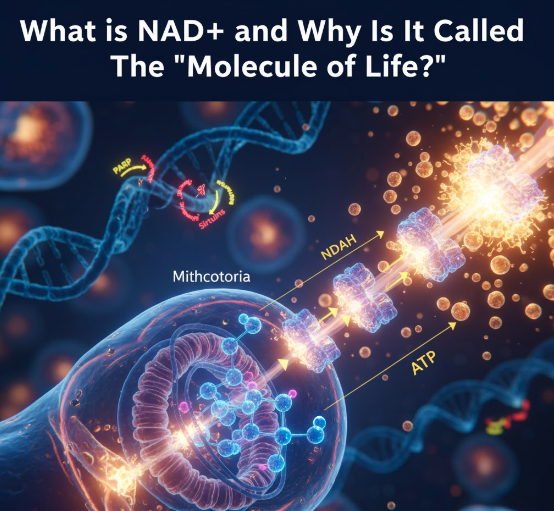
This is NAD+’s most famous job. Inside each of your cells are tiny organelles called mitochondria, often called the “cellular power plants.” They generate adenosine triphosphate (ATP), which is the actual energy currency your cells use to function.
NAD+ is essential for this process. It acts as a key electron carrier in the Krebs Cycle (or Citric Acid Cycle), shuttling electrons to the electron transport chain within the mitochondria, where the bulk of ATP is produced. Simply put, without sufficient NAD+, your mitochondria cannot efficiently convert carbohydrates and fats from your diet into usable cellular energy. This leads to fatigue, sluggishness, and a general feeling of low vitality.
2. DNA Repair and Cellular Defense
Our DNA is constantly under attack from environmental stressors like UV radiation, pollution, and normal metabolic byproducts. Thankfully, we have repair crews. One of the most important is a family of enzymes called sirtuins, often called “guardian genes” or “longevity genes.”
Sirtuins are critically dependent on NAD+ to function. They use NAD+ to remove acetyl groups from proteins, which helps:
- Repair damaged DNA.
- Silence genes that can promote aging.
- Reduce inflammation.
- Improve cellular stress resistance.
When NAD+ levels are high, sirtuins are active, diligently maintaining genomic stability and cellular health. When NAD+ declines, their activity wanes, and DNA damage can accumulate—a key hallmark of aging.
3. Regulating Circadian Rhythms
Your body’s internal clock, or circadian rhythm, dictates your sleep-wake cycles, hormone release, and even metabolism. NAD+ levels naturally fluctuate in a 24-hour cycle, influencing the activity of core clock proteins. Proper NAD+ rhythms help ensure you feel alert during the day and restful at night. Disrupted NAD+ levels can contribute to poor sleep and metabolic dysregulation.
4. Supporting Cellular Communication and Signaling
NAD+ is also involved in calcium signaling and acts as a substrate for other enzymes like PARPs (Poly-ADP-ribose polymerases), which are crucial for DNA repair and controlling cell death (apoptosis). When NAD+ is low, PARP activity can consume so much of it that it starves the sirtuins, creating a vicious cycle of cellular dysfunction.
The NAD+ Crisis: Why Our Levels Decline With Age
Here lies the central problem of aging: our NAD+ levels plummet as we get older. Research indicates that by middle age (40-60), our NAD+ levels may be only half of what they were in our youth. By the time we reach 80, we may have as little as 1-10% of our youthful NAD+.
This dramatic decline is driven by two primary factors:
- Reduced Production: Our bodies simply become less efficient at synthesizing NAD+ as we age.
- Increased Consumption: Age-related stressors, including chronic inflammation and DNA damage, lead to overactivation of NAD+-consuming enzymes like CD38. Think of CD38 as a “rogue enzyme” that acts like a leak in your cellular fuel tank, rapidly breaking down NAD+.
This age-related NAD+ deficiency creates a cascade of negative effects:
- Sluggish Mitochondria: Less fuel for power plants means less ATP, resulting in fatigue.
- Accumulated DNA Damage: With sirtuins less active, DNA repairs are not made as efficiently.
- Metabolic Issues: Poor energy conversion can affect blood sugar regulation and weight management.
- Cognitive Decline: Neurons are exceptionally energy-hungry; without sufficient fuel, brain fog and memory issues can arise.
How to Support Your NAD+ Levels: A Science-Backed Approach
The good news is that this decline is not necessarily a one-way street. Scientific research has identified several ways to support and potentially boost your NAD+ levels.
Lifestyle Interventions: The Foundation
- Exercise: Physical activity is one of the most powerful natural boosters of NAD+. It activates enzymes that synthesize NAD+ and encourages the creation of new, healthy mitochondria. Both aerobic and resistance training have been shown to be effective.
- Caloric Restriction & Fasting: Practices like intermittent fasting or time-restricted eating have been shown to increase NAD+ levels and activate sirtuins. This is thought to be an evolutionary survival mechanism that enhances cellular repair when food is scarce.
- Heat and Cold Exposure: Saunas and cold plunges create mild metabolic stress that can upregulate NAD+ production pathways and improve mitochondrial function.
- Sunlight in Moderation: While excess sun is harmful, sensible sunlight exposure helps produce Vitamin D, which plays a role in the NAD+ synthesis pathway.
Dietary Sources: Building Blocks for NAD+
You can provide your body with the raw materials it needs to make NAD+. Key precursors (vitamins) include:
- Tryptophan: An essential amino acid found in turkey, chicken, eggs, and seeds.
- Nicotinic Acid (Niacin or Vitamin B3): Found in chicken breast, tuna, avocado, and peanuts.
- Nicotinamide (another form of B3): Found in meat, fish, and mushrooms.
However, obtaining therapeutic doses of these precursors through diet alone to significantly raise NAD+ levels can be challenging.
NAD+ Supplementation: The Direct Precursor Approach
This is where modern science offers a more direct solution. Because the NAD+ molecule itself is too large to enter cells effectively through oral supplementation, researchers have focused on precursors—smaller molecules that cells can easily absorb and then convert into NAD+.
The most effective and well-researched of these is Nicotinamide Riboside (NR).
Why Nicotinamide Riboside (NR) is a Game-Changer:
- Efficient Conversion: NR has a unique and highly efficient pathway to becoming NAD+ within the cell.
- Robust Research: It is the subject of numerous clinical trials. For instance, a landmark 2018 randomized, double-blind, placebo-controlled study published in Nature Communications found that supplementing with 300mg of NR increased NAD+ levels by over 50% in healthy middle-aged and older adults in just 8 weeks.
- Safety Profile: Clinical studies have shown NR to be safe and well-tolerated.
Beyond the Basics: An Advanced Look at a Comprehensive NAD+ Supplement
While NR is a powerful starting point, the most advanced supplements are now looking at the bigger picture: not just refueling the cell, but also preventing the leak and supporting overall mitochondrial health.
Let’s examine what a comprehensive, multi-faceted NAD+ supplement might look like, based on the latest longevity research. We’ll use MitoThrive™ as a case study to illustrate these advanced principles.
A Closer Look at a Synergistic NAD+ Formula: The MitoThrive™ Example
A product like MitoThrive™, developed by Dr. Pedi Mirdamadi and the team at MD/PROCESS®, is designed to address the NAD+ problem from multiple angles. Its formula is a prime example of how modern science is creating more nuanced solutions.
1. The Primary Fuel: Nicotinamide Riboside (NR)
As discussed, NR is the star player for directly boosting NAD+ levels. MitoThrive™ includes a clinically-researched dose of NR to serve as the foundational “fuel” for the mitochondria.
2. Plugging the Leak: The Role of Apigenin
Remember the rogue enzyme CD38 that consumes NAD+? A smart formula doesn’t just add more fuel; it also tries to fix the leak. Apigenin is a natural flavonoid found in parsley and chamomile. Pioneering research from the Mayo Clinic identified apigenin as a potent CD38 inhibitor. By including apigenin, a supplement can help slow the wasteful breakdown of NAD+, allowing the newly boosted levels to last longer and be more effective.
3. The Mitochondrial Cleaner: L-Glutathione
If mitochondria are engines, they need to be kept clean to run efficiently. L-Glutathione is the body’s master antioxidant, crucial for neutralizing the free radicals produced as a byproduct of energy generation in the mitochondria. Like NAD+, glutathione levels decline with age. Supplementing with glutathione helps protect mitochondrial integrity, ensuring they can make the best use of the increased NAD+ fuel supply.
4. The Supporting Cast: A Longevity & Vitality Kickstart Blend
A truly comprehensive formula may include additional supportive nutrients. MitoThrive™, for example, features a proprietary blend with ingredients like:
- Coenzyme Q10 (CoQ10): Another critical molecule in the electron transport chain for ATP production.
- Trans-Resveratrol: Known to work synergistically with NAD+ to activate sirtuins.
- Other B-Vitamins and Minerals that act as cofactors in the NAD+ synthesis and energy production pathways.
This multi-ingredient, synergistic approach—Refuel (NR) + Protect (Apigenin) + Cleanse (Glutathione)—represents the cutting edge of longevity supplementation, moving beyond a single-ingredient focus.
Addressing Common Questions (FAQ)
Q: Are NAD+ supplements safe?
A: High-quality NAD+ precursors like Nicotinamide Riboside (NR) have been shown in multiple clinical trials to be safe and well-tolerated. As with any new supplement, it’s always advisable to consult with your healthcare provider, especially if you have pre-existing medical conditions or are taking other medications.
Q: How long does it take to feel the effects?
A: This varies by individual. Some people report increased energy and improved sleep within the first few weeks. However, the cellular and DNA repair benefits are cumulative. The clinical trial showing a >50% increase in NAD+ levels lasted 8 weeks, suggesting a commitment of at least two months is reasonable to assess its effects.
Q: Can I get enough NAD+ from food alone?
A: While a healthy diet provides the building blocks (like B3 vitamins), it is incredibly difficult to achieve the therapeutic levels shown in clinical studies through diet alone. The amounts of NR in supplements are far more concentrated and bioavailable.
Q: Is this just for older adults?
A: While NAD+ decline accelerates after 30-40, adults of any age who are interested in proactive, preventative health and optimizing their cellular energy can consider supporting their NAD+ levels. The goal is to support healthspan—the years of healthy living—not just lifespan.
Conclusion: Taking Charge of Your Cellular Health
NAD+ is far more than a buzzword in the wellness industry. It is a legitimate and fundamental “Molecule of Life,” whose decline is intimately tied to the aging process and the onset of age-related health challenges. By understanding its role, we can make informed decisions to support our cellular vitality.
The path to maintaining healthy NAD+ levels is a combination of conscious lifestyle choices—regular exercise, mindful eating, and stress management—and, for many, the strategic use of advanced, science-backed supplements that offer a direct and efficient way to refuel our cellular engines.
The field of longevity is evolving rapidly, and the ability to positively influence our health at the most fundamental, cellular level is an unprecedented opportunity. By supporting your NAD+ levels, you are investing in the very energy that powers your life.
Ready to Explore the Science of Cellular Energy?
The journey to understanding and supporting your NAD+ levels is a personal one, grounded in education and choice. If you are interested in learning more about a comprehensive, multi-action supplement that utilizes the powerful synergy of Nicotinamide Riboside (NR), Apigenin, and L-Glutathione, you can explore the research and formulation in detail.
To learn more about the science behind MitoThrive™ and see if it’s right for you,


>>>> visit the official website click here. <<<<

The official site contains the full list of ingredients, clinical references, and detailed information directly from the makers, ensuring you get accurate and transparent data to inform your health decisions.
Scientific References:
- Camacho-Pereira J, Tarragó MG, Chini CCS, Nin V, Escande C, Warner GM, Puranik AS, Schoon RA, Reid JM, Galina A, Chini EN. CD38 Dictates Age-Related NAD Decline and Mitochondrial Dysfunction through an SIRT3-Dependent Mechanism. Cell Metab. 2016 Jun 14;23(6):1127-1139.
- Schultz MB, Sinclair DA. Why NAD(+) Declines during Aging: It’s Destroyed. Cell Metab. 2016 Jun 14;23(6):965-966.
- McReynolds MR, Chellappa K, Baur JA. Age-related NAD+ decline. Exp Gerontol. 2020 Feb 22;134:110888.
- Massudi H, Grant R, Braidy N, Guest J, Farnsworth B, Guillemin GJ. Age-associated changes in oxidative stress and NAD+ metabolism in human tissue. PLoS One. 2012;7(7):e42357.
- Janssens GE, Houtkooper RH, Hoeks J. NAD+ to assess health in aging humans. Aging (Albany NY). 2022 Aug 6;14(15):5962-5963.
- Zhu XH, Lu M, Lee BY, Ugurbil K, Chen W. In vivo NAD assay reveals the intracellular NAD contents and redox state in healthy human brain and their age dependences. Proc Natl Acad Sci U S A. 2015 Mar 3;112(9):2876-81.
- Conze, D., Brenner, C. & Kruger, C.L. Safety and Metabolism of Long-term Administration of Nicotinamide Riboside Chloride in a Randomized, Double-Blind, Placebo-controlled Clinical Trial of Healthy Overweight Adults. Sci Rep 9, 9772 (2019).
- Escande C, Nin V, Price NL, Capellini V, Gomes AP, Barbosa MT, O’Neil L, White TA, Sinclair DA, Chini EN. Flavonoid apigenin is an inhibitor of the NAD+ ase CD38: implications for cellular NAD+ metabolism, protein acetylation, and treatment of metabolic syndrome. Diabetes. 2013 Apr;62(4):1084-93.
- Sekhar RV, Patel SG, Guthikonda AP, Reid M, Balasubramanyam A, Taffet GE, Jahoor F. Deficient synthesis of glutathione underlies oxidative stress in aging and can be corrected by dietary cysteine and glycine supplementation. Am J Clin Nutr. 2011 Sep;94(3):847-53.
Disclaimer: This article is for informational purposes only and does not constitute medical advice. It is not intended to diagnose, treat, cure, or prevent any disease. Always consult with a qualified healthcare professional before starting any new supplement or making significant changes to your health regimen. The author and publisher are not responsible for any adverse effects resulting from the use of information contained in this article. Individual results may vary.
READ ALSO THE ARTICLE TITLED:
Leave a Reply