Your mouth is a window to your body’s health. Discover the proven connections between oral bacteria and serious conditions like heart disease, diabetes, and dementia, and what you can do to protect yourself.
DISCLOSURE:
As an ClickBank Affiliate, I earn commissions from qualifying purchases made through links in this article. This income supports my research and content creation. Please understand that I recommend this product because I believe in its quality and benefits, and after conducting thorough research.

You’ve likely always been told that brushing and flossing are essential for a healthy smile and fresh breath. But what if the stakes were much, much higher?
What if the health of your mouth could directly influence your risk for heart attacks, your ability to manage diabetes, and even the health of your brain?
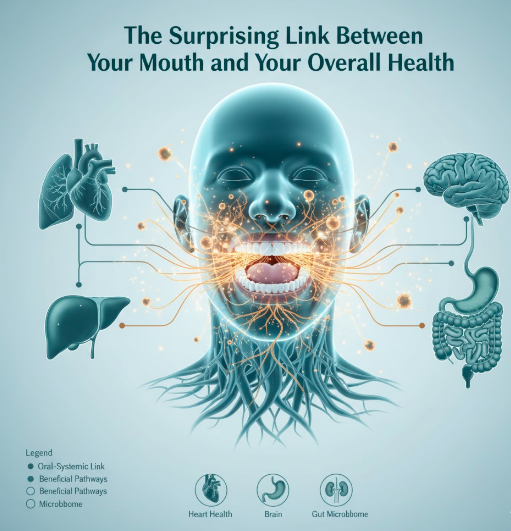
This isn’t speculative wellness advice; it’s a conclusion drawn from decades of rigorous scientific research. The field of oral-systemic health has exploded, revealing that your mouth is not an isolated island but a central hub intimately connected to the rest of your body.
Ignoring your oral health is no longer just about risking a cavity. It’s about ignoring a critical early-warning system for systemic inflammation and disease. This article will guide you through the fascinating and powerful science that links the state of your mouth to the health of your entire body.
The Gateway: Understanding Your Oral Microbiome
To understand the mouth-body connection, you must first meet the residents of your mouth: your oral microbiome. This is a complex ecosystem of billions of bacteria, fungi, and viruses. In a state of balance, these microbes live in harmony, aiding in digestion, supporting your immune system, and protecting against invaders.
The problem begins with an imbalance, a state known as oral dysbiosis. This typically starts with the buildup of plaque—a sticky, colorless biofilm of bacteria. If not removed through brushing and flossing, these bacteria can lead to two primary oral diseases:
- Gingivitis: The early stage of gum disease, characterized by inflammation, redness, and bleeding gums.
- Periodontitis: The advanced stage, where the inflammation becomes chronic, destroying the bone and connective tissue that hold your teeth in place. It creates pockets between the teeth and gums that become breeding grounds for harmful bacteria.
Periodontitis is more than just “bad gums.” It is a significant, chronic inflammatory condition. And inflammation is the common thread that ties your oral health to your overall health.
The Three Pathways of Connection
How does a problem in your mouth affect organs feet away? Through three primary pathways:
- The Bloodstream (Bacteremia): Inflamed, bleeding gum tissue acts as an open wound, providing a direct entry point for harmful oral bacteria into your circulatory system. These bacteria can travel throughout your body, seeding infection and inflammation in distant sites.
- Systemic Inflammation: Chronic gum disease means your body is constantly fighting a low-grade infection. This keeps your immune system in a perpetual state of alert, flooding your bloodstream with inflammatory markers like C-reactive protein (CRP). This systemic inflammation damages blood vessels and tissues everywhere.
- The Oral-Gut Axis: Every time you swallow, you ingest a sample of your oral microbiome. An overgrowth of harmful bacteria in the mouth can disrupt the delicate balance of your gut microbiome, which is itself a cornerstone of overall health, influencing everything from immunity to mental well-being.
Let’s explore the specific, and sometimes startling, connections that science has uncovered.
The Mouth-Heart Connection: More Than a Myth
The link between oral health and heart disease is one of the most well-established.
- The Evidence: A comprehensive analysis published in the Journal of Periodontology concluded that individuals with periodontal disease have a significantly higher risk of developing heart disease.
- The Mechanism: Harmful oral bacteria, like Porphyromonas gingivalis, enter the bloodstream and travel to the heart. They can:
- Inflame Blood Vessels: The bacteria can directly infect and inflame the inner lining of arteries (the endothelium), contributing to atherosclerosis—the buildup of fatty plaques that narrow and harden arteries.
- Promote Clot Formation: The body’s inflammatory response to these bacteria can make blood platelets “stickier,” increasing the likelihood of clot formation, which can lead to heart attacks and strokes.
- Be Found in Plaques: Researchers have actually found DNA from oral bacteria embedded within arterial plaques.
The Mouth-Diabetes Connection: A Vicious Cycle
The relationship between diabetes and periodontitis is a classic two-way street.
- Diabetes -> Mouth: People with diabetes are more susceptible to infections, including periodontal disease. High blood sugar levels impair white blood cell function, the body’s primary defense against bacterial infection. This makes it harder to fight off the bacteria causing gum disease.
- Mouth -> Diabetes: Conversely, severe periodontitis makes it significantly harder to control blood sugar. The chronic inflammation from the gums increases insulin resistance, meaning the body’s cells don’t respond effectively to insulin. This creates a vicious cycle: diabetes worsens gum disease, and gum disease worsens blood sugar control.
The good news? Treating gum disease has been shown to improve blood sugar control in diabetic patients, sometimes as effectively as adding a second medication.
The Mouth-Brain Connection: An Emerging Frontier
Perhaps the most surprising link is between oral health and cognitive decline.
- The Evidence: Multiple studies have found that older adults with poor oral health or tooth loss have a higher risk of developing dementia and Alzheimer’s disease.
- The Mechanism: While research is ongoing, two primary theories exist:
- Inflammatory Pathway: The systemic inflammation from periodontitis can contribute to neuroinflammation, which damages brain cells.
- Direct Bacterial Invasion: The bacterium P. gingivalis has been found in the brains of Alzheimer’s patients. It releases enzymes called gingipains that are toxic to neurons and may directly contribute to the development of amyloid plaques, a hallmark of Alzheimer’s.
While this link is still being unraveled, it underscores the potential far-reaching consequences of oral infection.
Other Critical Systemic Links
The connections don’t stop there:
- Respiratory Health: Inhaling bacteria from an unhealthy mouth can lead to respiratory infections like pneumonia, especially in the elderly or those with compromised immune systems.
- Pregnancy and Birth Outcomes: Pregnant women with severe periodontitis have a higher risk of preterm birth and low birth weight babies. The theory is that oral bacteria and their inflammatory byproducts can reach the placenta and amniotic fluid.
- Rheumatoid Arthritis (RA): Both conditions are driven by chronic inflammation. The same bacteria that cause gum disease can trigger an inflammatory response that may exacerbate RA. Studies show that treating periodontitis can reduce RA pain and symptoms.
- Kidney Disease: Chronic kidney disease and periodontitis are linked through their shared relationship with inflammation and a weakened immune system.
Your Action Plan: Protecting Your Whole Body by Caring for Your Mouth
Understanding this connection is empowering. It means that your daily oral care routine is one of the most impactful preventive health measures you can take. Here’s how to build a routine that protects your mouth and your body.
1. Master the Mechanical Basics (Non-Negotiable)
- Brush Effectively: Twice daily for two minutes with a soft-bristled brush, angling the bristles toward the gumline to disrupt plaque.
- Floss Daily: This is critical. Flossing is the only way to remove biofilm from between teeth, the primary area where periodontitis starts.
- Clean Your Tongue: Use a tongue scraper to remove a massive reservoir of bacteria that contributes to both bad breath and systemic issues.
2. Adopt an Anti-Inflammatory Diet
- Limit Sugar: This is the primary fuel for harmful, acid-producing bacteria.
- Embrace Antioxidants: Eat a rainbow of fruits and vegetables to help your body combat inflammation.
- Stay Hydrated: Water helps wash away food particles and bacteria and promotes healthy saliva flow.
3. Partner with Your Dentist
- See your dentist and dental hygienist regularly—at least every six months, or more often if recommended. Professional cleanings remove tartar (calcified plaque) that you cannot remove at home.
4. Consider Advanced, Proactive Support
For those who want to go beyond the basics to actively support their oral ecosystem, the science of oral probiotics offers a promising avenue.
Oral probiotics introduce specific, beneficial strains of bacteria designed to support a balanced oral microbiome. By crowding out the harmful, inflammatory pathogens, they help to maintain a state of balance and reduce the overall inflammatory burden from your mouth.
A Closer Look at a Holistic Approach: Supporting the Ecosystem
When looking at products that support this whole-body philosophy, it’s important to evaluate their ingredients and purpose. A product like ProvaDent, developed by board-certified dentist Dr. Brett Knudson, is formulated on the principle of addressing oral health at the microbial level.
How ProvaDent’s Formula Aligns with Systemic Health Goals:
- 4 Strains of Probiotics: This is the core of the approach. Introducing beneficial bacteria is a direct strategy to compete with and suppress the harmful, inflammatory bacteria linked to periodontitis and systemic issues.
- Organic Xylitol: This natural prebiotic sweetener is well-researched for its ability to disrupt the metabolism of cavity-causing bacteria without harming beneficial microbes, thus supporting a less pathogenic environment.
- Cranberry Extract: Some research suggests compounds in cranberries can prevent bacteria from adhering to surfaces, potentially reducing the formation of plaque biofilm—the very starting point of gum disease.
- A Dentist’s Formulation: The involvement of a dental professional ensures the product is designed with an understanding of oral pathologies and their systemic implications.
Who might consider this? This type of supplement is not a treatment for disease but a supportive measure for individuals who:
- Are keenly aware of the mouth-body connection and want a proactive strategy.
- Have a family history of conditions like heart disease or diabetes and want to mitigate all risk factors.
- Maintain good oral hygiene but are looking for an additional layer of biological support for their microbiome.
It is essential to remember that such supplements are adjuncts to, not replacements for, traditional oral care and professional dental treatment.
The Big Picture: Your Mouth is a Barometer for Your Health
The message from the scientific community is clear: the distinction between oral health and overall health is an artificial one. Your mouth is a barometer, providing clear signals about the state of inflammation in your entire body.
Bleeding gums are not normal. They are a sign of infection and inflammation. By taking this sign seriously, you are not just saving your teeth—you are actively investing in the longevity and health of your heart, your metabolic system, and your brain.
Making your oral health a priority is one of the most powerful and accessible steps you can take on your journey to lifelong wellness. It’s time to see the dental aisle not just as a place for toothpaste, but as a first line of defense for your entire body.
Ready to Make Your Oral Health a Cornerstone of Your Overall Wellness?
If you are motivated by the science of the mouth-body connection and are looking for a comprehensive, probiotic-based approach to support your oral ecosystem, exploring dentist-developed solutions is a logical next step.


On the official site, you can review the ingredients, the research behind them, and see how a proactive approach to oral care can be a key part of your overall health strategy. Take this step today for a healthier mouth and a healthier you.
Disclaimer: This article is for informational purposes only and is not a substitute for professional medical or dental advice, diagnosis, or treatment. Always seek the advice of your dentist, physician, or other qualified health provider with any questions you may have regarding a medical condition. Never disregard professional medical advice or delay in seeking it because of something you have read on this blog. Statements regarding dietary supplements have not been evaluated by the Food and Drug Administration and are not intended to diagnose, treat, cure, or prevent any disease. Individual results may vary.
READ ALSO THE ARTICLE TITLED:
Are You Making This Common Mistake That Harms Your Oral Health?
Leave a Reply